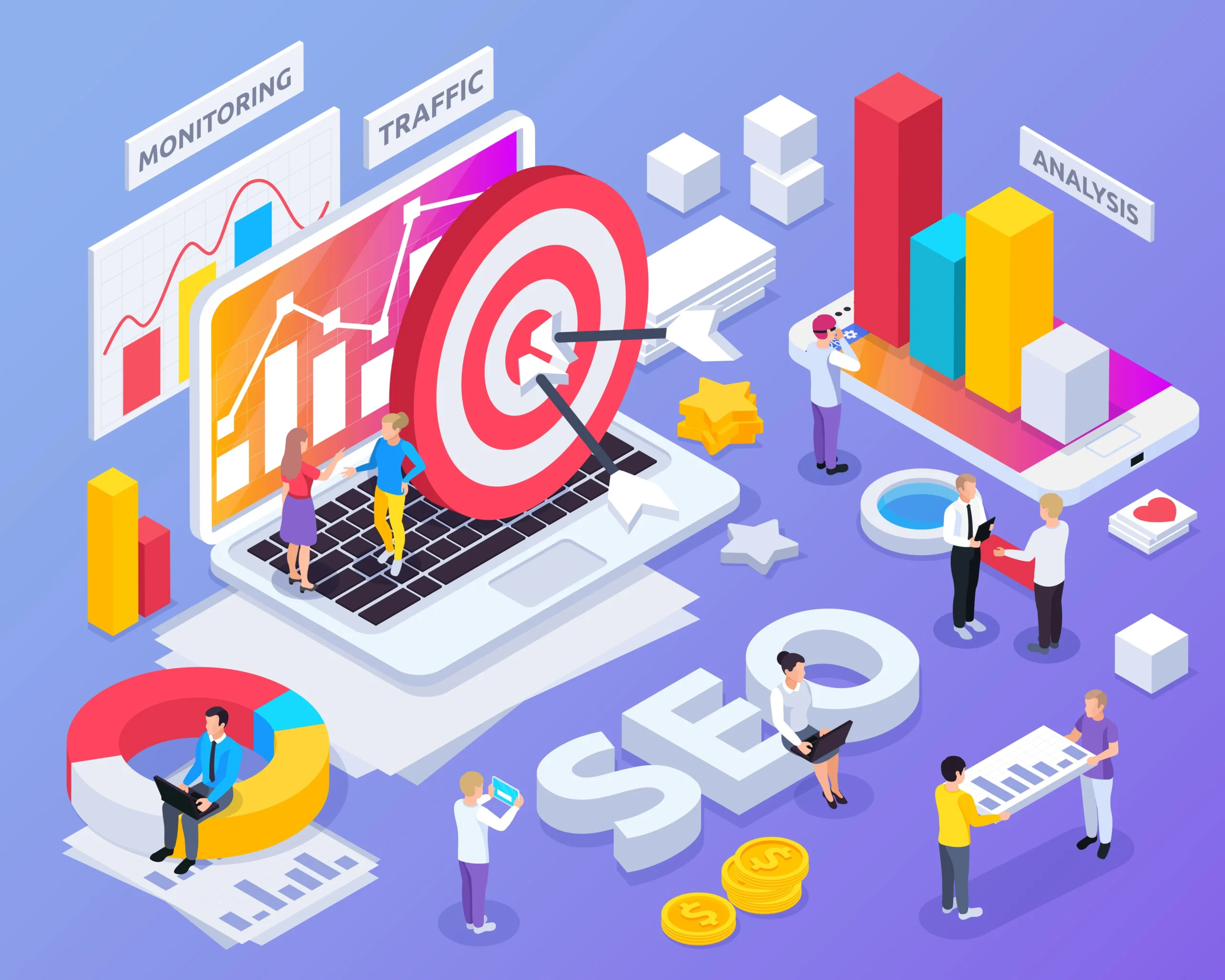
Search Engine Optimization (SEO) has become one of the most important skills in the digital world. Whether you run a business, manage a blog, work as a marketer, or are simply curious about how websites appear on Google, understanding SEO can create massive opportunities.
This guide will explain SEO in a very simple and human way, without confusing terms or technical overload.
By the end, you will know exactly:
- What SEO is.
- How search engines work.
- Types of SEO.
- How to do keyword research.
- How to optimize your pages.
- How to build backlinks.
- How to plan a 6-month SEO strategy.
- How AI is changing SEO in 2025.
- And much more.
Let’s begin.
What Is SEO?
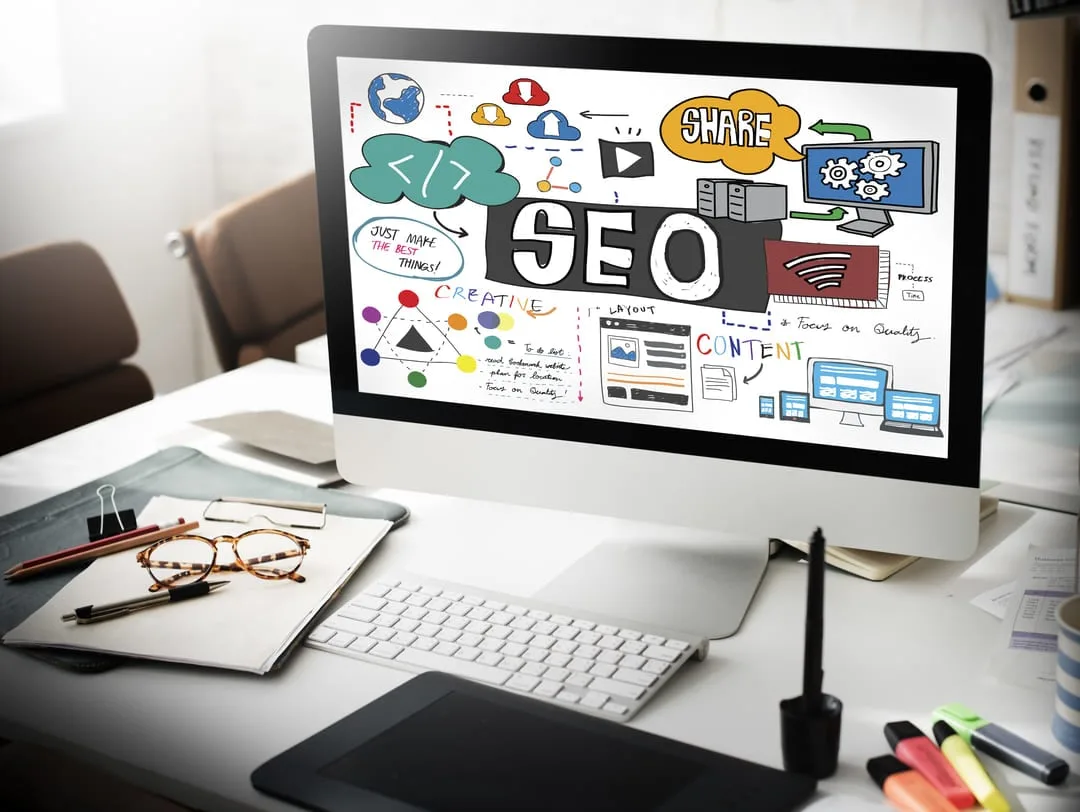
SEO stands for Search Engine Optimization, which means improving your website so it appears higher on Google when people search for something.
Simple Example
If someone searches for “best digital marketing services”, Google shows many websites.
The websites at the top get the most clicks, traffic, leads, and customers.
SEO helps your website appear at the top so people can find you easily.
Why SEO Is Important
- Users naturally trust websites that show up on the first page of Google.
- You get free traffic without paying for ads.
- More visibility = more conversions and sales.
- SEO builds long-term online presence.
In simple words:
SEO helps Google understand your website and recommend it to people who need it.
How Search Engines Work
Google works like a super-fast librarian. It collects web pages, organizes them, and then decides which page is the best answer to someone’s question.
Step 1: Crawling
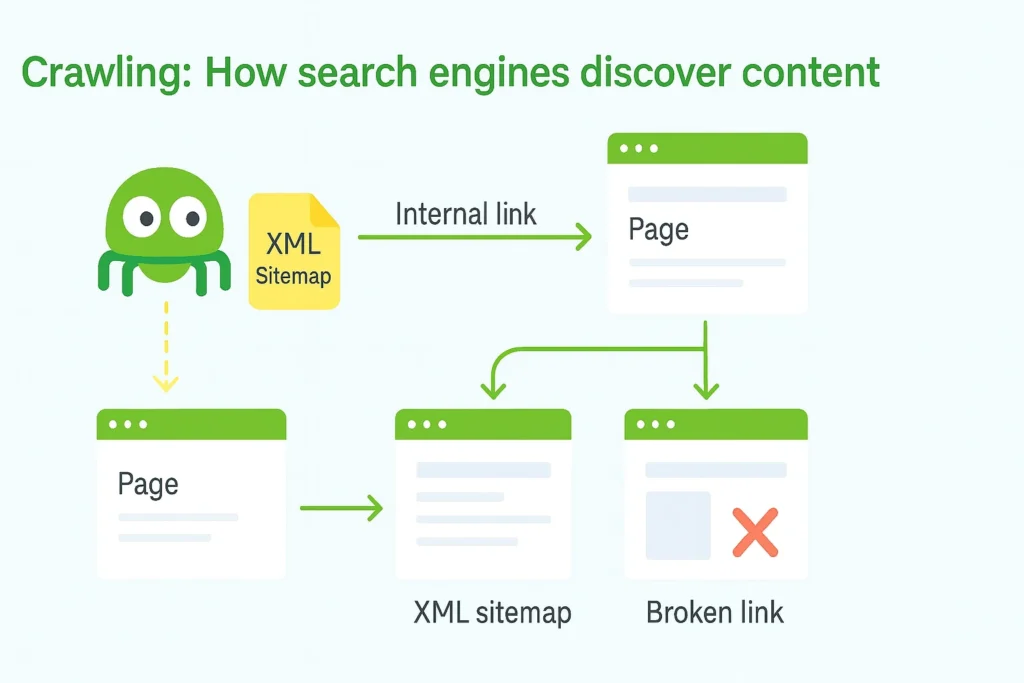
Google’s crawling bots visit your website to understand its content and structure.
These bots read your pages, your text, images, links, and even your website code.
If your website is:
- Slow.
- Broken.
- Hard to load.
- Your text.
- Images.
- Code.
- Links.
- Structure of your pages.
…then Google may not crawl it properly.
Step 2: Indexing

After crawling, Google stores your page in its database (called the “index”).
This process is like putting your book on a library shelf. If a page is not indexed, it cannot appear on Google even if your content is excellent.
Step 3: Ranking
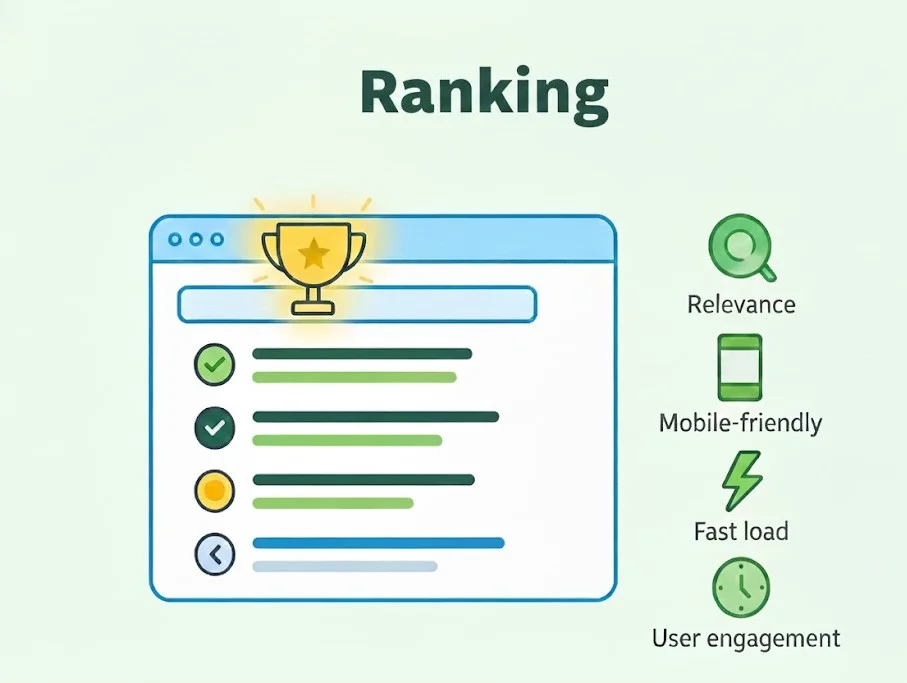
When someone searches something, Google decides which pages appear first.
It checks:
- Relevance (Is your page related to the search?).
- Content quality.
- User experience.
- Website trust and authority.
- Mobile-friendliness.
- Page speed.
Google uses 200+ ranking factors. Therefore, to rank higher, you must understand SEO from multiple angles: content, technical structure, and authority.
Types of SEO
SEO is not just one thing — it has multiple categories. All of them work together to produce strong results.
A) On-Page SEO
On-page SEO refers to all the improvements you apply directly within your website.
This helps Google understand:
- What your page is about.
- Who it is for.
- How useful it is.
On-Page SEO Includes:
- Using the right keywords.
- Writing SEO-friendly titles.
- Adding meta descriptions.
- Using headings (H1, H2, H3).
- Writing high-quality content.
- Adding images with alt text.
- Internal linking.
- Clean and short URLs.
Good on-page SEO makes your content clear, structured, and easy for Google to read.
B) Off-Page SEO
Off-page SEO includes everything done outside your website to build trust and authority.
Google trusts websites that other websites trust.
The best way to build this trust is through backlinks links from other websites pointing to yours.
Off-Page SEO Includes:
- Backlinks.
- Social media mentions.
- Brand publicity.
- Reviews.
- Guest posts.
- PR articles.
If reputable websites link to you, Google believes your content is valuable.
C) Technical SEO
Technical SEO improves how your website works from a performance and structure perspective.
Even great content won’t rank if your website:
- Loads slowly.
- Has broken pages.
- Isn’t mobile-friendly.
- Doesn’t follow Google’s technical guidelines.
Technical SEO Includes:
- Website speed optimization.
- Mobile-first design.
- XML sitemap creation.
- Robots.txt file.
- HTTPS security.
- Core Web Vitals optimization.
- Schema markup.
- Fixing broken links.
Technical SEO ensures your website is fast, stable, and easy to crawl.
D) Local SEO
Local SEO helps your business show up in searches made for your specific area.
Examples:
- “Dentist near me”.
- “AC repair in Delhi”.
- “Best café in Mumbai”.
Local SEO Includes:
- Google Business Profile optimization.
- Local reviews.
- Local citations.
- Local keywords.
- Consistent NAP (Name, Address, Phone).
Local SEO is crucial for businesses that operate from a physical location.
E) AI SEO / GEO (Generative Engine Optimization)
This is the future of SEO in 2026.
AI search platforms like:
- ChatGPT Search.
- Google AI Overview.
- Perplexity.
now show direct answers.
To appear in AI-generated search results, your content needs to be:
- Factual.
- Structured.
- Easy to summarize.
- Entity-focused.
- Written with clarity.
Most websites are not optimizing for AI yet so using AI SEO gives you a major advantage.
Keyword Research
Keyword research is the foundation of SEO.
Keywords are the phrases people type when they search on Google.
Example keywords:
- “best phone under 15000”.
- “how to write a blog”.
- “digital marketing course online”.
Why Keyword Research Is Important
It helps you understand:
- What your audience is searching for.
- How many people search for it?
- How difficult it is to rank.
- What type of content they expect.
Types of Keywords
1. Short-Tail Keywords
- Usually 1–2 words.
- High search volume.
- Very competitive
Example: “SEO”.
2. Long-Tail Keywords
- 3–5 words.
- Easier to rank.
- More specific
Example: “how to learn SEO step by step”
3. LSI Keywords
Words related to the main keyword.
Example for SEO:
- search ranking.
- organic traffic.
- Google algorithm.
4. Intent-Based Keywords
These show why the user is searching:
- To learn.
- To compare.
- To buy.
Popular Keyword Tools
- Google Keyword Planner.
- Ahrefs.
- SEMrush.
- Ubersuggest.
- AnswerThePublic.
- Google Trends.
Good keyword research means writing content people actually want.
On-Page SEO Optimization
On-page SEO is like decorating and organizing your shop so customers understand what you sell.
Important On-Page SEO Elements
1. SEO-Friendly Title
- Must include your main keyword.
- Must attract attention.
Example:
What Is SEO? Complete Beginner’s Guide (2026 Update)
2. Meta Description
- Appears under your title on Google.
- Should summarize your page clearly.
3. Clean URLs
Short, simple, and keyword-rich URLs perform best.
Good:
groxdigital.com/what-is-seo
Bad:
groxdigital.com/2025/01/seo-guide-best-complete-long-url
4. Headings (H1, H2, H3)
These divide your content into sections.
Google reads headings like chapters of a book.
5. Internal Linking
Link to other relevant pages on your website.
Benefits:
- More time on site.
- Better navigation.
- Improved crawlability.
6. Image Optimization
Images should have:
- Alt text.
- Compressed size.
- Descriptive file names.
7. Schema Markup
Schema helps Google understand your content better.
Types:
- FAQ schema.
- Article schema.
- Breadcrumb schema.
It increases your chances of appearing in rich results.
Technical SEO
Technical SEO improves how your website works behind the scenes.
Major Technical SEO Elements
1. Website Speed
Fast websites rank higher.
You can improve speed by:
- Compressing images.
- Using a CDN.
- Reducing heavy scripts.
- Caching.
2. Mobile-Friendly Design
Google uses mobile-first indexing, so your mobile version is more important than your desktop version.
3. XML Sitemap
This file tells Google which pages to crawl and index.
4. Robots.txt
Controls what parts of your website search engines can crawl.
5. HTTPS (SSL Certificate)
Secure websites rank better.
6. Core Web Vitals
Google checks:
- Largest Contentful Paint (LCP) measures how quickly the main part of your page loads.
- First Input Delay (FID) – how quickly the page responds when the user interacts.
- Cumulative Layout Shift (CLS) – whether elements shift during loading.
Poor performance lowers rankings.
Off-Page SEO & Link Building
Off-page SEO improves your website’s authority.
What Are Backlinks?
A backlink refers to a hyperlink that directs users from one website to a different website.
Google sees backlinks as “votes of confidence.”
High-quality backlinks boost your domain authority, which directly helps improve your rankings.
Safe Backlink Methods
- Guest posts.
- Resource page links.
- PR mentions.
- Skyscraper technique.
- Broken link building.
- High-quality content people love to reference.
Avoid:
- Buying cheap links.
- Spammy sites.
Bad links can harm SEO.
6-Month SEO Strategy
Month 1–2: Setup & Research
- Technical audit.
- Keyword research.
- Fix crawling/indexing issues.
- Plan your content strategy.
Month 3–4: Publish & Optimize
- Write blogs and service pages.
- Improve old content.
- Start building internal links.
- Begin link-building outreach.
Month 5–6: Improve & Scale
- Analyze Google Search Console data.
- Update underperforming content
- Add advanced content like:
- FAQs.
- Comparison posts.
- Tutorials.
SEO takes time but produces long-term results.
SEO Analytics
You must track results to know whether your SEO is working.
Tools to use:
- Google Analytics 4 → Track users.
- Google Search Console → Monitor clicks, impressions, ranking.
- Ahrefs / SEMrush → Competitor research
Key metrics:
- Total impressions.
- Total clicks.
- CTR (Click Through Rate).
- Average position.
- Organic traffic.
- Bounce rate.
- Conversions.
This helps you understand which pages need improvement.
Future of SEO
SEO is changing quickly because Google is becoming smarter.
Future trends:
A) AI SEO (GEO – Generative Engine Optimization)
AI tools now answer questions directly.
So your content must be:
- Well-structured.
- Fact-based.
- Entity optimized.
- Easy for AI to summarize.
B) Voice Search Optimization
People now search using Alexa, Siri, and Google Voice.
Voice search queries are longer and more conversational.
C) Video SEO
YouTube is the second-largest search engine.
Google ranks content that integrates video.
D) Semantic SEO & Entities
Google now understands topics, not just keywords.
That means:
- You must cover a topic deeply.
- Content must be complete, not shallow.
Conclusion
SEO is one of the most powerful ways to grow your online presence organically. With the right mix of quality content, technical optimization, and consistent effort, any website including platforms like GroxDigital can improve its visibility and reach the right audience. SEO may take time, but the long-term results of higher rankings, more traffic, and increased trust make it worth every step. Start small, stay consistent, and let your website grow with the power of SEO.
FAqs
SEO means improving your website to appear higher on Google.
Usually 3–6 months depending on competition.
Yes, SEO is easy to learn with practice.
Content, backlinks, and website performance.


 By
By