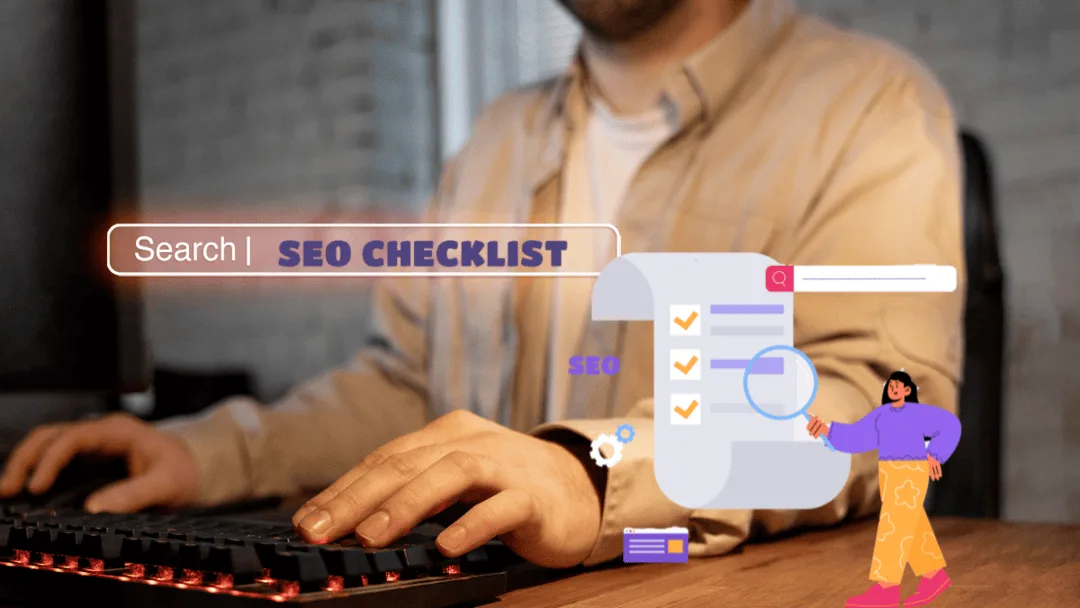
SEO works best when you follow a clear checklist again and again without it, your efforts may not give results. In this guide, you’ll discover how to follow the SEO checklist step by step, which tools can help, how to attempt result and what error to stay away from.
Table of Contents
| 1. Introduction 2. What is an SEO Checklist? 3. Why Use an SEO Checklist? 4. Step-by-Step: How to Use This SEO Checklist 5. Where Can You Check? (Tool, Place & Metric Map) 6. Frequency: When to Check 7. Advanced Enhancement 8. SEO Checklist vs SEO Audit 9. SEO Checklist vs SEO Strategy 10. On-Page vs Technical vs Off-Page SEO 11. Common SEO Mistakes to Avoid 12. Conclusion |
What is an SEO Checklist?
An SEO checklist is an easy to follow guide that explains the key steps for better website rankings. It includes on-page, technical, content, and off page SEO task, set into daily, weekly and monthly schedule.
Why Use an SEO Checklist?
An SEO checklist isn’t just a nice to have it’s the backbone of consistent, high quality optimization. Here’s why it matters:
1. No Missed Steps
When done manually, tasks like indexing, Core Web Vitals (CWV), and canonicalization are often missed. An SEO checklist ensures that nothing is forgotten.
2. Speed and Focus
A checklist removes confusion by giving your team clear priorities. That way, they work quicker and focus only on actions that make the biggest impact.
3. Trackable Results
Each task on the checklist is either done or not, making it simple to track progress and see what still needs work.
4. Scalable Process
When you create new pages or run fresh campaigns, the same checklist ensures they all meet the same quality standards. It’s basically an SEO playbook that acts like an SOP and scales with your business.
Step-by-Step: How to Use This SEO Checklist
Step 1: Keyword Research Checklist
Good SEO always starts with the right keywords. If your content doesn’t match what users are looking for or targets overly competitive keywords, it may never rank. Here’s how to do it:
What to Do
- Choose your main keyword and include 4–6 related or supporting ones.
- Always check what the user wants: to learn something, compare options, or make a purchase.
- Check the current top results (SERP) to see what kind of content ranks like a how to guide, listicle, or comparison page
Pass Criteria
- Check that your primary keyword fits what your content is meant to achieve.
- Make sure your content format (guide, list, tutorial, etc.) matches what’s ranking on page one.
- You have mapped at least 4–6 related secondary keywords to support the main topic.
Where to Check
- Google Search → Review the top 10 results.
- Keyword research tools → Ahrefs, SEMrush, Google Keyword Planner.
- Extra ideas → Check ‘People Also Ask’ and ‘Related Search’ on Google.
Step 2: On Page SEO Checklist
On-page SEO is about presenting your content so it’s easy to understand for people and search engines like giving it the right packaging.
What to Do
- Title Tag & Meta Description: Title tag 55–60 character and Meta description 140–160 characters. Add your main keyword early in both.
- Headings: One H1 per page for the main idea. Break down details with H2 and H3 headings.
- Keyword Placement: Add your primary keyword in the first 100 words of the page.
- Image: Add descriptive alt text and clear file name so Google and visually impaired user can understand them.
- Add internal links to help visitors discover more useful pages on your site.
- External Link: Add references to reliable and authoritative site for extra trust.
- Content Layout: Keep paragraphs short, use bullet point and add tables where needed. This makes the content easy to scan.
Pass Criteria
- Title and H1 are unique (no duplicates).
- No keyword cannibalization (two pages competing for the same keyword).
- Readability is good (Flesch Reading Score around 60+ for general blogs).
- No thin or duplicate content.
- Canonical tags are set if there are similar versions of the page.
Where to Check
- Page Source or CMS Preview → Double-check tags and structure.
- On-page audit tools → Screaming Frog, Sitebulb.
- Readability tool → Grammarly and Hemingway.
Step 3: Technical SEO Checklist
Technical SEO makes sure Google can easily crawl and index your site. Without it, quality content can still fail to rank.
What to Do
- Indexability:
- Check robots.txt so search engine can access all important page.
- Send your XML sitemap to Google Search Console.
- Status Codes:
- Ensure key pages return a 200 OK status code.
- Fix redirect chain (3xx), broken link (404 errors) and server errors (5xx).
- Core Web Vitals (CWV):
- Largest Contentful Paint → less than 2.5s
- Cumulative Layout Shift → less than 0.1
- INP (Interaction to Next Paint) → less than 200ms
- Mobile Optimization:
- Ensure your site is mobile friendly and fully responsive.
- Security:
- Use HTTPS everywhere.
- Fix any mixed content issues HTTP resource on HTTPS page.
- Canonicalization & Tags:
- Set canonical tag to prevent duplicate content issues.
- Use pagination and hreflang tag if targeting multiple language or region.
Pass Criteria (How to Know You Did It Right)
- Important pages are indexed and show up in “yourdomain.com” searches.
- Majority of pages get green scores in CWV on both mobile and desktop.
- No orphan pages (pages without internal links), especially for key money or hub pages.
Where to Check
- Google Search Console → Indexing, Sitemaps, Core Web Vitals.
- PageSpeed Insights / Lighthouse → Speed and CWV reports.
- Crawl tool (Screaming Frog, Sitebulb) → Status code, redirect, internal linking.
- Server/CDN setting → Verify caching, compression GZIP/Brotli, and modern protocol HTTP/2 or HTTP/3.
Step 4: Content SEO Checklist
Great content connects SEO and user experience it answers search intent, builds trust, and leads users forward.
What to Do
- Topical Depth: Don’t just scratch the surface. Cover related subtopics, answer FAQs, address objections, and include use cases to make your content the “complete guide” on the subject.
- EEAT Signals: Add an author bio, credentials, references to trusted sources, and a “last updated” date to build credibility.
- Rich Media: Use custom image, diagram, chart and explainer video to improve clarity and engagement.
- Freshness: Regularly update data, stats, screenshots, and processes so your content stays current and competitive.
Pass Criteria (How to Know You Did It Right)
- Users spend time on the page (good dwell time) and don’t bounce back quickly (low pogo-sticking).
- Make sure your content covers most of the common questions people ask about the topic (around 80–90%).
- Includes clear CTAs (like download, demo, or contact) so readers know the next step.
Where to Check
- SERP Gap Analysis → Look for subtopics competitors cover but you don’t.
- Google Search Console (Queries Report) → Spot missing queries and content angles.
- Analytics Tools → Track engagement rate, scroll depth, and time on page.
Step 5: Off Page SEO Checklist
Off page SEO is about building trust and authority for your website beyond just content. Google looks at what other websites say about your site and the links pointing to it to see if you’re trustworthy.
What to Do
- Contextual Backlinks: Earn links from relevant blogs, resources, or even by converting unlinked brand mentions into links. Guest posting still works if it’s on high quality, niche relevant sites.
- Digital PR: Publish data driven studies, expert quotes, or industry insights that other sites naturally want to reference.
- Local Citations → List your business in reputable niche directories focus on quality over quantity.
- Brand Signals → Keep NAP (Name, Address, Phone) consistent across platforms and stay active on social media.
Pass Criteria
- Number of referring domains is steadily growing focus on quality rather than volume.
- Anchor text distribution looks natural no keyword stuffing or manipulative pattern.
- Toxic or spammy link are monitored and disavowed only if truly necessary.
Where to Check
- Ahrefs, SEMrush, Majestic → Track referring domain, backlink, and anchor text.
- Local listing tool/manager → To verify consistent NAP and directory presence.
Where Can You Check? (Tool, Place & Metric Map)
| Area | Where to Check | What to Look For | Pass Criteria |
| Indexing | GSC → Pages | Indexed/Excluded reasons | Money/content hubs indexed |
| Sitemaps | GSC → Sitemaps | Last read, discovered URLs | Fresh, error-free sitemap |
| Performance | GSC → Performance | Top queries/pages, CTR | CTR improves, new terms |
| CWV | GSC + PSI/Lighthouse | LCP/CLS/INP | Mostly “Good” |
| Crawl | Screaming Frog | Status codes, canonicals | 2xx on key pages |
| Speed | PSI/Lighthouse | TTFB, blocking scripts | Green CWV |
| Content Gaps | SERP + GSC queries | Missing topics | Add FAQs/sections |
| Internal Links | Crawl + manual | Orphans, depth | Hubs within 2–3 clicks |
| Backlinks | Ahrefs/SEMrush | RD growth, anchors | Natural growth |
| Local | GBP, citations | NAP consistency | 100% consistent |
| Analytics | GA4 | Engagement, conversions | Meets target benchmarks |
Frequency: When to Check
SEO isn’t a one-time job. To keep performance strong, you need to monitor and adjust regularly. Here’s how often to check different areas:
Weekly
- Review Google Search Console performance (queries, clicks, CTR).
- Check if new pages are indexed.
- Watch for Core Web Vitals (CWV) regressions sometimes updates or new elements slow things down.
Monthly
- Run a full site crawl to catch issues like broken links or missing tags.
- Check internal link health make sure important pages aren’t orphaned.
- Review your backlink profile trend are you gaining high quality links consistently?
Quarterly
- Refresh top-performing content with updated stats, insights, and CTAs.
- Improve template, design, and overall UX for better engagement.
- Review your technical stack hosting, CMS, CDN and plugin to make sure your site is fast, secure and scalable.
Advanced Enhancement
After covering the basic, advanced SEO tactic can give your site an extra edge. While optional, they often improve visibility and performance when implemented correctly.
- Schema Markup: Add structured data like Article, FAQ, How To, or Product schema so search engines better understand your content and you increase your chance of showing rich snippet in result.
- Topical Clusters: Organize your content into pillar pages supported by 6–10 related articles. This strengthens topical authority and improves internal linking.
- Log File Sampling : Analyze server log to see how search engine bot crawl your site, which area they prioritize, and where crawl budget may be wasted.
- Internationalization: Use hreflang tags to serve the correct language or regional version of your site to global audiences.
- A/B Testing: Experiment with various titles and meta descriptions to see which gets more clicks from search results.
SEO Checklist vs SEO Audit
People often confuse an SEO checklist with an SEO audit, but they serve different purposes. Here’s the difference:
| Aspect | SEO Checklist | SEO Audit |
| Purpose | A repeatable framework of ongoing SEO tasks | A deep diagnostic analysis of your site’s SEO health |
| Depth | Focused on action items and clear pass/fail criteria | Comprehensive report covering technical, on-page, and off-page factors |
| Frequency | Weekly or monthly (continuous improvement) | Quarterly, or whenever major issues or traffic drops occur |
| Output | Clear tasks, assigned owners, and deadlines | Findings with prioritized fixes and recommendations |
SEO Checklist vs SEO Strategy
An SEO checklist and an SEO strategy are also not the same thing they work together but serve different roles.
| Aspect | SEO Checklist | SEO Strategy |
| Focus | Day-to-day tactics and SEO hygiene | Big-picture goals, positioning, and sequencing of efforts |
| Timeframe | Short to mid-term weekly/monthly | Mid to long-term 6–12 months or more |
| Inputs | Based on SEO best practices | Based on market research, competitor analysis, and available resources |
| Output | Repeatable tasks that keep the site optimized | A prioritized roadmap of initiatives that drive growth |
On-Page vs Technical vs Off-Page SEO
SEO has three main areas On-Page, Technical, and Off-Page SEO. Each plays a different role but works together for stronger rankings.
| Type | Covers | Core KPI (What to Measure) |
| On-Page SEO | Titles, meta tags, page copy, headings, internal linking | CTR (Click-Through Rate), user engagement |
| Technical SEO | Site speed, crawlability, Core Web Vitals, security (HTTPS), mobile-friendliness | Index coverage, CWV scores |
| Off-Page SEO | Backlinks, digital PR, brand mentions, citations | Referring domains, authority growth |
Common SEO Mistakes to Avoid
A checklist helps, but it’s still easy to fall into bad habits that damage SEO over time. Here are key mistakes to avoid:
- Focusing only on keyword, ignoring intent → Ranking for a keyword doesn’t help if the content doesn’t actually answer what the searcher want.
- Publishing without technical checks → Skipping Core Web Vitals (CWV) tests or forgetting to verify if the page is indexed can waste all your content efforts.
- Keyword Cannibalization → Avoid multiple pages targeting the same keyword.
- Low-quality link building → Avoid spammy directories, paid link or irrelevant backlink.
- Set and forget → SEO is ongoing, not a one-time task. Rankings change, competitors move, and algorithms update continuous optimization is key.
Conclusion
By consistently following this SEO checklist, your website will be crawlable, fast, relevant and trusted the signal Google reward with higher ranking. And if you want to grow faster, our SEO services turn this checklist into a custom strategy that drive real growth and lasting result.
FAQs
A checklist ensures best practices, but ranking #1 depends on competition, authority, and differentiation.
At least quarterly—Google updates and business priorities keep changing.
The foundation is the same, but adjustments are needed depending on page type (blog, product page, location page).


 By
By